
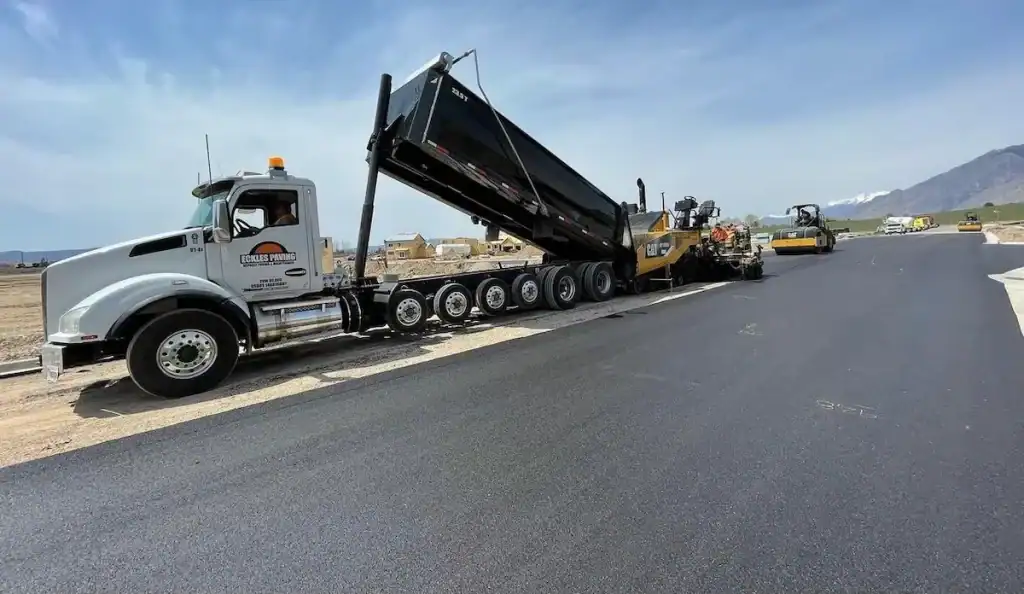
Commercial asphalt paving projects involve important decisions that can influence pavement performance for years. Businesses rely on parking lots, access roads, loading zones, and paved service areas to support daily operations. These surfaces must accommodate different traffic patterns, vehicle weights, and environmental conditions.
Although asphalt paving may appear straightforward, successful construction requires proper planning, preparation, materials, and workmanship. Experienced Utah asphalt paving contractors understand how these factors work together and why each stage of a commercial project matters.
For business owners and commercial property managers, choosing an experienced contractor can help reduce construction problems and improve the overall quality of a paving investment.
Understanding Commercial Property Requirements
Commercial properties have different pavement requirements depending on their purpose.
A shopping center parking lot may experience frequent vehicle movement throughout the day. An office complex may require organized parking spaces and convenient access routes. Warehouses and industrial facilities may need pavement capable of supporting heavy trucks and equipment.
Experienced contractors understand that a single pavement specification may not be appropriate for every section of a property.
They can evaluate how different areas are used and recommend construction methods that reflect those requirements.
Top Job Asphalt works with commercial paving projects throughout Utah and Idaho, offering services for different business and property needs.
Proper Site Evaluation Before Construction
A successful paving project begins with understanding the existing site conditions.
Before construction starts, contractors should examine the current pavement, soil conditions, drainage patterns, and areas that may require excavation or additional preparation.
Existing pavement may contain soft spots, settlement, damaged sections, or drainage deficiencies. If these problems are ignored, the new surface may experience premature deterioration.
Experienced contractors understand the importance of identifying these issues before asphalt installation.
A proper site assessment helps businesses understand what work is necessary and why certain construction methods are recommended.
Importance of Base Preparation
The underlying base provides essential support for asphalt pavement. Even a high-quality surface may fail if the base is weak, unstable, or improperly prepared.
Commercial paving projects may require excavation, grading, removal of unsuitable materials, and installation or improvement of base layers.
Experienced Utah asphalt paving contractors understand how preparation affects pavement performance.
They should also evaluate soft areas and determine whether additional stabilization or replacement work is necessary.
Top Job Asphalt emphasizes base preparation and identifying soft spots as part of its commercial paving approach.
Choosing Appropriate Asphalt Thickness
Pavement thickness is another important consideration for commercial projects.
Parking areas that primarily accommodate passenger vehicles may have different requirements from loading docks, truck lanes, and industrial access roads.
If pavement is not designed for its expected traffic loads, it may develop rutting, cracking, or other forms of structural deterioration.
Experienced contractors consider vehicle weight, traffic frequency, turning movements, and site conditions when determining suitable pavement specifications.
Top Job Asphalt has completed commercial projects that involved different pavement thicknesses for standard parking areas and heavier-use truck lanes.
Proper Asphalt Placement and Compaction
The quality of asphalt installation depends on several construction factors, including material handling, placement conditions, and compaction.
Asphalt must be placed and compacted appropriately to achieve the required pavement density and surface consistency.
Insufficient compaction can contribute to premature deterioration, while poor placement may result in uneven surfaces or drainage concerns.
Experienced contractors understand the importance of coordinating equipment, materials, and installation procedures throughout the paving process.
Businesses should ask how the contractor manages these construction stages and checks the finished surface.
Effective Drainage Planning
Water is one of the major factors that can contribute to asphalt deterioration.
Commercial parking lots should be designed to direct water toward suitable drainage areas. Improper slopes and low spots can result in standing water, which may enter pavement cracks and weaken supporting materials.
Experienced contractors consider drainage during the planning and construction stages.
Correcting drainage problems before paving may help businesses avoid recurring maintenance issues.
Managing Large Projects Efficiently
Large commercial paving projects often involve several work areas, equipment requirements, and scheduling considerations.
A shopping center may need parking sections completed in stages. An industrial property may require coordination around truck movement and delivery schedules.
Experienced contractors understand how to organize these activities and communicate project requirements to property managers.
Top Job Asphalt highlights phased mobilization and night work as ways to reduce interruptions during commercial paving projects.
Access to Multiple Paving Solutions
An experienced contractor should be familiar with different paving and maintenance methods.
Depending on the property condition, a business may need new asphalt installation, reconstruction, milling, overlays, patching, crack sealing, or seal coating.
Having access to multiple services makes it easier for property managers to address immediate pavement problems and plan future maintenance.
Top Job Asphalt offers these services along with commercial striping and other property improvement solutions.
Supporting Long-Term Pavement Performance
Experienced contractors recognize that completing the installation is not the end of pavement management.
Commercial asphalt surfaces need periodic inspections and maintenance to address developing damage.
Businesses should consider crack sealing, seal coating, localized patching, drainage inspections, and striping as part of an ongoing maintenance strategy.
A contractor who understands both construction and maintenance can help property managers make more informed decisions about the condition of their parking lots.
Conclusion
Experience matters because commercial asphalt paving requires careful consideration of site conditions, base preparation, pavement thickness, drainage, materials, and construction scheduling.
Working with experienced Utah asphalt paving contractors can help businesses select appropriate paving solutions and manage projects more effectively.
Top Job Asphalt provides commercial asphalt paving, repair, and maintenance services throughout Utah and Idaho. Businesses can visit its website to explore available solutions and request an estimate for their commercial paving requirements.
