
A fit-out contractor once asked us to hold a finished order for eleven days because the site was not ready, and we did, because a scheduled line can be rescheduled while a disappointed customer cannot be recovered. This explains what the product is made from, component by component, and what changes when a cheaper grade is substituted. Impact resistance is also higher, which matters in corridors and plant rooms where a partition takes regular knocks. Water resistance is the clearest practical difference: a gypsum core can be softened by prolonged damp, while a mineral core is not.
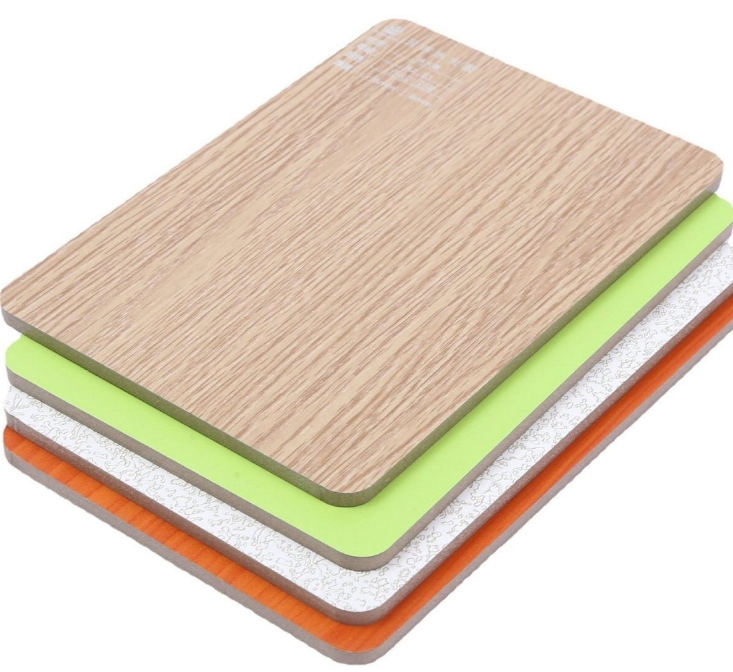
The market for magnesium oxide board suppliers has shifted towards lighter, faster-to-install systems that reduce wet trades on site. In bathrooms and kitchens, a tiled or panelled finish over the board protects it while retaining the fire performance of the substrate. The board does not dissolve or delaminate when wet, and once the source of water is removed it dries without losing strength. Boards stored on site should be kept flat and off the ground, because a board that has absorbed ground moisture is difficult to install flat.
Much of this applies equally to Waterproof SPC flooring, which is often specified alongside it on the same project. Cutting produces dust, so extraction or a mask should be provided, as with any mineral board. That distinction matters more than it first appears. The board is worked with standard carpentry tools, and a scored-and-snapped cut is used for straight runs while a saw is used for openings. Because the board is dense, panels are usually handled in pairs rather than singly, and lifting equipment is avoided by using shorter boards overhead.
Specifying magnesium oxide board suppliers starts with the substrate, the moisture the wall will see and the traffic the surface must survive. For export, the declaration should name the standard applied in the destination country, not only the standard used at the factory. We provide the full document set in a single file so that a project team can forward it without reassembling it. If a specific approval is needed for a market we do not routinely supply, we say so at the quotation stage rather than after the order.
In practice, magnesium oxide board suppliers are chosen on measurable properties rather than on catalogue photographs, and the difference only becomes visible over years. Where a building is compartmentalised, the board often forms part of the boundary, which brings additional requirements beyond the class itself. Fire doors, ducts and service penetrations each interrupt a wall, and the surrounding board must be detailed to match the tested assembly. The certificate issued for a product names the standard, the thickness and the assembly tested, and all three must match the specification.
The mix ratio of the magnesium salts is held constant between production runs.
Magnesium Oxide Board Composition
What Buyers Usually Ask First
The core is formed from magnesium oxide and magnesium chloride or sulphate, reinforced with glass fibre mesh and filled with light mineral aggregate. There is a commercial reason behind each of these choices, and it is rarely the obvious one. Density varies across the range, and a denser board is stronger and more sound resistant while a lighter board is easier to handle overhead. We keep the mix ratio fixed between runs, because changing it changes the board in ways that only appear after months of exposure.
Smoke density is measured on its own scale, separately from flame spread, and public buildings are often governed by the smoke figure. Toxicity assessment looks at the gases produced under fire conditions, and for a mineral board the results are inherently favourable. Where the board is used behind another finish, the smoke performance of that finish still has to be considered.
Public Space Applications
Maintenance is minimal, but surface damage should be repaired with the same material rather than filled with a generic compound. The order in which these are decided matters as much as the values themselves. Ceilings in these environments use the same board with a different fixing detail, and the assembly must be tested for that orientation. Shafts, escape stairs and service risers are the most common locations, where the board provides both a fire barrier and a finished surface. Choosing a a fire resistant wall board factory comes down to how it answers questions about tolerance, inspection and lead time rather than how it photographs a catalogue.
Because the board is inorganic it also tolerates the humidity found in some service spaces better than a paper-faced gypsum product. Most of the answers above come from conversations with importers over the past decade, and the ones we cannot answer we say so plainly.
