
The field of photonics has observed exceptional innovations, specifically in the growth of numerous modulators that play vital duties in countless optical applications. Among these, fiber acousto-optic modulators (AOMs) and their many variants, such as space AOMs and free-space AOMs, stick out due to their flexibility and efficiency. An acousto-optic modulator makes use of sound waves to regulate the intensity, frequency, or phase of light passing with a medium, using an efficient approach for pulse modulation. With the expanding demand for high-resolution and accuracy applications, these devices have become important in areas like telecommunications, clinical imaging, and clinical study.
Among one of the most popular features in laser innovation is ultra-narrow linewidth, frequently connected with single-frequency lasers. These lasers generate light with an exceedingly narrow spooky width, making them perfect for numerous detailed applications, including coherent communication systems and high-resolution spectroscopy. A fiber-coupled AOM, which incorporates the AOM into a fiber optic system, supplies smooth combining with single-frequency fiber lasers. This assimilation demonstrates the fad towards enhanced density and efficiency in optical systems without giving up efficiency.
The utility of fiber optic delay lines can not be overemphasized, specifically in making innovative optical systems that call for precise timing and synchronization. These delay lines harness the fundamental properties of optical fibers to manage light signals effectively, permitting engineers and scientists to discover high-speed information transmission or elaborate timing experiments with very little loss of fidelity. The electric fiber optics delay line works as a main element in this context, promoting the manipulation of light signals to match certain needs.
Discover electric optical fiber delay line the most up to date innovations in photonics, concentrating on the important duty of fiber acousto-optic modulators in boosting laser applications, telecoms, and accuracy optical systems for diverse industries.
Modulators are important in laser systems, playing an essential role in transforming continuous wave outputs into pulse styles. Acousto-optic Q-switch modulators offer this exact function, enabling rapid modulation of laser outcomes, which results in high-peak power pulses.
The distinction in between acousto-optic buttons and modulators is an essential aspect of recognizing exactly how these devices function in various scenarios. Acousto-optic switches properly redirect light beam of lights, therefore making it possible for various routing performances within optical systems. In contrast, a modulator changes the light’s residential or commercial properties, directly influencing the light beam’s qualities. This difference delineates their corresponding functions in laser systems and highlights the diversity of applications each device satisfies.
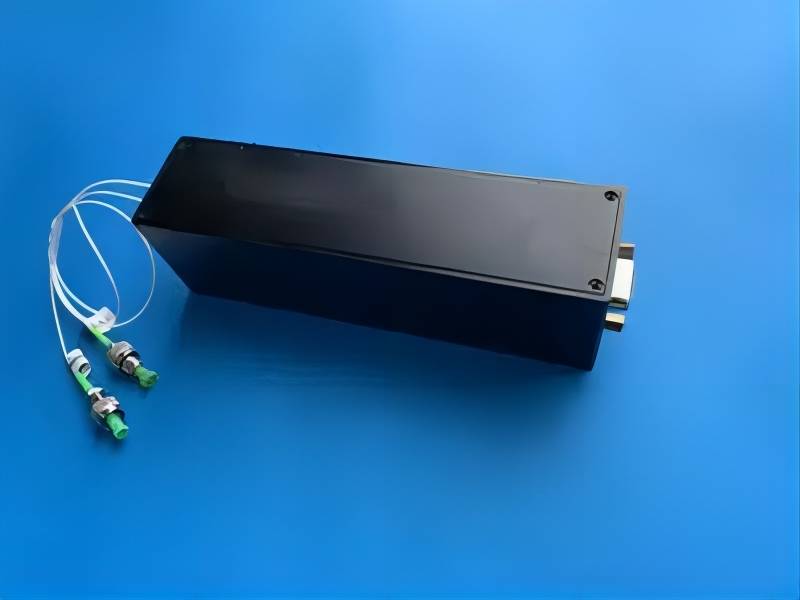
Acousto-optic devices have actually increasingly obtained grip in the market, driven by the intensifying demand for innovative optical innovations. The acousto-optic modulator market is experiencing significant development due to applications in telecoms, armed forces systems, and industrial production.
The features of narrow linewidth laser resources are fundamental to details applications, where coherence and accuracy are critical. Narrow linewidth fiber lasers display stable exhaust with marginal spectral spread, dealing with applications in fiber-optic interactions and sensing innovations. These top qualities are important when handling long-distance information transmission, where signal degradation can considerably impact the top quality of information obtained. Combining these fibers with sophisticated modulators makes it possible for scientists to explore new frontiers in optical interaction systems.
Acoustic optical deflectors add to the flexibility of optical systems, supplying a means to adjust light dynamically and efficiently by utilizing acoustic waves as the managing system. Such devices can be found in different applications, from laser scanning systems to innovative imaging techniques. By making use of the concepts of acousto-optics, these deflectors assist in achieving specific and rapid modifications in the beam’s trajectory without the need for complicated mechanical components.
In discovering the sorts of pulse modulation, one understands the details and range fundamental in the field. Pulse modulation strategies, such as pulse-width modulation (PWM) and pulse-position modulation (PPM), allow adjustment of light based on emission to produce varying signal types. These techniques foster developments in electronic devices and photonics, from managing laser outcomes to improving the performance of fiber optic systems.
Further factor to consider of optical passive components reveals their vital duty in enhancing system integrity. These components, which include filters, isolators, and couplers, promote the organization and administration of light within complex optical arrangements without the demand for active involvement. Their contribution to overall system performance is vital, primarily when integrated with modulators and various other dynamic optical devices. Especially, the seamless integration of passive and active components specifies the ability of modern photonic systems.
The growing emphasis on space applications stresses the demand for trustworthy and robust optical systems that can work efficiently in extreme problems. Space acousto-optic modulators, in specific, suit the special needs of space goals, where factors such as radiation direct exposure and temperature variations can dramatically impact performance. The development of space-grade acousto-optic devices makes sure that communication and data collection continue to be undisturbed in the rough environments of space.
Acousto-optic Q-switching represents among one of the most effective approaches of producing high-energy pulses, essential for applications ranging from laser marking to clinical treatments. The modulation capacities inherent in AOMs permit them to adjust to differing needs, enhancing pulse period and energy result. They give an innovative pathway to raise laser applications throughout diverse fields.
As we delve better right into the future of photonics, it becomes progressively clear that development in laser modulators and acousto-optic modern technologies is critical. The developments in modulator drivers improve the effectiveness with which AOMs and EOMs run, making it possible for much faster and more trusted efficiency. The crossover between advancements in modulation and the boosting need for greater bandwidth and reduced latency in interaction systems recommends a future abundant with opportunities for strengthened optical communications.
Understanding the fundamental technicians that underpin acoustic optical modulators will result in exceptional style and performance renovations as research remains to prosper. The expedition of brand-new materials, combinations, and methods in areas like micro-nano construction will likely generate devices with even better control and extended functional life times. These improvements not only guarantee boosted performance for existing systems but welcome entirely new applications within emerging innovations in quantum computing, robotics, and progressed production.
In recap, the domain name of acousto-optic modulators and related fiber-optic innovations embodies fast progression and complexity, serving as fundamental components within many contemporary optical applications. With the growing demand for accuracy and high performance in various industries, the advancement of acousto-optic devices, such as fiber AOMs, remains to evolve, adapting to new obstacles and opportunities. As designers and researchers press the borders of advancement, these devices will certainly continue to be main to forming the future of optical interaction, laser applications, and beyond, heralding a brand-new period of technological innovation.
